
Cloudy with a Chance of Answers

Cloudy with a Chance of Answers@cloudyanswers

0 followers
Follow

2026 episodes (40)

Why Do Ice Have Spikes in the Freezer?

Why Do Ice Have Spikes in the Freezer?

Luna asks: Why do ice have spikes in the freezer? We explore how water expands when it freezes, how the surface sometimes leaves a tiny hole, and how the expanding water pushes up through the hole to build a little ice tower layer by layer. Featuring a bright J-pop anime opening style song about it!

Do Apples Bruise Like Bananas?

Do Apples Bruise Like Bananas?

Luna asks: Do apples bruise like bananas? We explore how both fruits use the same PPO browning trick when their cells get crushed, why banana bruises spread while apple bruises stay contained, and what it means that both are climacteric fruits that keep ripening after picking. Featuring a bright 1970s disco-pop song about it!

If the thorn on cars is the antenna, where is the antenna on a Tesla?

If the thorn on cars is the antenna, where is the antenna on a Tesla?

Luna asks: If the thorn on cars is the antenna, where is the antenna on a Tesla? The answer takes us into the glass. Tesla hid the FM radio antenna in the rear window, the GPS antenna by the rearview mirror, and the cellular and Wi-Fi antennas in the upper windshield corners. No stick, no shark fin, no nothing. Plus: why Tesla removed AM radio, and how the car gets music through the internet instead. Featuring a bouncy synth-pop song: It’s in the Glass!

Why Are There Cracks in the Wall When the Paint Dries?

Why Are There Cracks in the Wall When the Paint Dries?

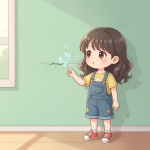
Luna asks why cracks appear in painted walls when the paint dries. We explore what paint is made of, how it shrinks as water evaporates, and why that shrinking creates a tug-of-war between the paint and the wall. Featuring a bouncy 1960s girl-group pop song with handclaps and a wall-of-sound groove.

Why Do Bananas Bruise?

Why Do Bananas Bruise?

Luna asks: Why do bananas bruise? And why are their bruises black and brown, not like our skin which gets black and blue? We peel open the science of banana bruises — polyphenols, enzymes, and melanin — and compare them to human bruises with hemoglobin doing a whole rainbow of colors. Plus a tropical reggae-pop song about the banana’s bruise plan!

If We Put My Pottery Bowl in the Dishwasher, How Come It Doesn't Melt?

If We Put My Pottery Bowl in the Dishwasher, How Come It Doesn't Melt?

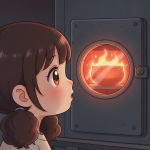
Luna asks: “If we put my pottery bowl in the dishwasher, how come it doesn’t melt?” When you make a pottery bowl, the clay starts out soft and squishy. It comes back from the studio hard as a rock — and it’s easy to think it just dried. But if it just dried, water would undo it, right? The dishwasher would turn it back to mush. The secret is that the bowl didn’t just dry — it went into a kiln, a super-oven hotter than lava. At that temperature, the clay particles fuse together chemically and become a whole new material called ceramic. Drying is something water can undo, but firing is a one-way trip that water can’t touch at all. Featuring a rockabilly earworm about a bowl that’s been through fire and doesn’t care about a little dishwasher spray.

Why Can't We Put Milk and Juice in Water Bottles?

Why Can't We Put Milk and Juice in Water Bottles?

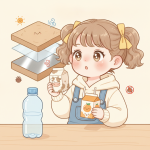
Luna asks: “Why can’t we put milk and apple juice into water bottles instead of cartons?” We explore why water is fine in thin plastic bottles, but milk and juice need a layered fortress of paper, plastic, and foil to protect against light, air, and germs. Plus a bright 1980s synth-pop song: Paper, Plastic, Foil! A Cloudy with a Chance of Answers episode. Asked by Luna.

Why Do Parents Look at Their Phones So Much?

Why Do Parents Look at Their Phones So Much?

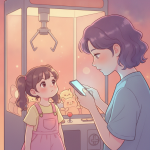
Luna asks: “Why do parents look at their phones so much?” We explore why phones are genuinely useful, how apps are designed to pull you back with bright colors and ding sounds, and the claw machine trick — a variable reward that makes brains keep checking. Plus a warm neo-soul pop song about looking up from the screen. A Cloudy with a Chance of Answers episode. Asked by Luna.

Where do the circular patterns around the seeds in the watermelon flesh come from?

Where do the circular patterns around the seeds in the watermelon flesh come from?

Wil asks: why do watermelon seeds have those pale circular rings around them in the red flesh? The answer takes us from a tiny flower on a vine to the secret of how the whole watermelon is built — those circles are the original cradles where each seed was born and fed. Featuring a sunny Afro-pop highlife song: Ring Ring Ring! Little Halo Ring!

Where Did People Come From?

Where Did People Come From?

Luna asks: Were there a boy and a girl on Earth that got married and had lots of people? How were people made? Were there always people on Earth? We explore the amazing story of life on Earth — from tiny cells in the ocean, through millions of years of slow change, to the first humans. We learn that there wasn’t just one first boy and one first girl, but a whole river of life that changed over millions of years. And we discover that humans didn’t come from apes — we’re more like cousins, sharing one ancient common ancestor from long, long ago.

How Did the Snowman in the Faraway Tree Get So Fat and Big?

How Did the Snowman in the Faraway Tree Get So Fat and Big?

Luna asks how the snowman in Enid Blyton’s Faraway Tree got so fat and big! We climb the Faraway Tree to the Land of Ice and Snow, learn how snowballs grow when you roll them, and discover why a magical snowman never melts — he just keeps getting rounder and rounder! A dreamy winter folk-pop song finishes the adventure.

How Do Lego Pieces Get Their Color?

How Do Lego Pieces Get Their Color?

Luna asks: How do Lego pieces get their color? In this episode, we explore how Lego bricks go from clear plastic pellets to the bright red, blue, yellow, and green bricks we all know and love. The secret? It is not paint, it is pigment mixed all the way through the melted plastic before it is molded into shape. Plus, we learn about ABS, the special plastic that makes Legos click together perfectly. Then we sing about it in a bouncy ska-pop song with brass and offbeat guitar! Question from Luna. Episode from Cloudy with a Chance of Answers.

How Do You Get Out of Quicksand?

How Do You Get Out of Quicksand?

Luna asks: How do you get out of quicksand? We learn what quicksand actually is (sandy soup!), why you won’t sink all the way under, and the secret to escaping: don’t panic, lean back, float, and wiggle slow. Plus a catchy reggae-pop song to help you remember! Have a question? Send it to us and it might become the next episode!

How Does a Car Know to Let Down the Air Bag?

How Does a Car Know to Let Down the Air Bag?

Luna asks: How does a car know to let down the air bag when it has an accident? We explore crash sensors, the tiny airbag brain, and how a soft pillow pops out faster than you can blink, all set to a catchy pop earworm!

Why Do Cars Have Thorns on the Roof?

Why Do Cars Have Thorns on the Roof?

Luna noticed something pointy on top of a car and asked: why do cars have thorns on the roof? It turns out that little spike is called an antenna, and it is basically the car ear! It catches radio signals so you can hear music, and some antennas even talk to satellites in space to help the GPS know where you are. Featuring a sunny Beach Boys-style surf pop song about antennas, shark fins, and signals from space.

If Mickey Isn't Real, What Even Is Disneyland?

If Mickey Isn't Real, What Even Is Disneyland?

Luna asks a deep question: if the Mickey you meet at Disneyland is just a person in a costume, does that mean the magic isn’t real? We talk about make-believe, why knowing how the trick works doesn’t have to ruin it, and how the person inside the costume IS the magic. Plus a song: The Person Inside.

Why Does Candle Fire Get Bigger When the String Is Bigger?

Why Does Candle Fire Get Bigger When the String Is Bigger?

Luna asks why a bigger wick makes a bigger flame on a candle. We explore how candle wax is the real fuel, how the wick acts like a tiny straw pulling liquid wax upward through capillary action, and how that wax turns into burning gas. Plus a song: The Bigger the Wick!

Do Turtles Breathe Through Their Butts?

Do Turtles Breathe Through Their Butts?

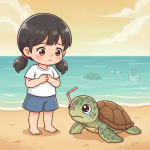
Luna asks: Do turtles breathe through their butts? It sounds like a joke, but the answer is kind of yes! We explore how turtles use their lungs, how they slow down in winter, and the secret superpower of cloacal respiration — where some turtles soak up oxygen through their skin near their bottom. Featuring the Fitzroy River turtle from Australia, which can stay underwater for weeks using this trick. Plus a funky catchy song: Butt Breather!

Are Straws Made Out of Microplastics?

Are Straws Made Out of Microplastics?

Luna asks: ‘Are straws made out of microplastics so it’s bad?’ We learn what straws are really made of (polypropylene plastic, not microplastics), how they can break down into microplastics over time, and why straws are actually a tiny piece of a much bigger puzzle. Fishing nets, bottles, and bags are way bigger ocean plastic problems — so skipping straws is nice, but the biggest wins come from the bigger pieces.

Is Glue Made Out of Hydrogen and Oxygen and Water?

Is Glue Made Out of Hydrogen and Oxygen and Water?

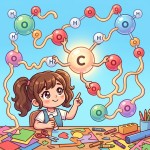
Luna asks: Is glue made out of hydrogen and oxygen and water? We zoom all the way down to atoms, the tiny Lego blocks of everything, and discover that water is H2O (two hydrogen, one oxygen). But glue is something else entirely. The real star of glue is carbon, the atom with four little arms that builds long sticky chains called polymers. Without carbon, there’d be no glue, no you, no me, no podcast! Featuring a catchy synth-funk song: ‘Sticky Sticky Polymer.’

Can Mosquitoes Talk to Each Other?

Can Mosquitoes Talk to Each Other?

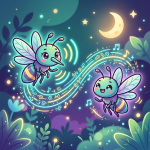
Luna asks whether mosquitoes can talk to each other. This episode explains how mosquitoes use buzzing and smell to send signals, then turns the answer into a playful electro-buzz song.

Where Did Earth's Water Come From?

Where Did Earth's Water Come From?

Luna asks where Earth’s water came from in the very beginning. We look at heat, volcanoes, rain, and a little help from space.

How do babies get papa's genetics?

How do babies get papa's genetics?

Thomas asks how babies get papa’s genetics. We explain sperm, egg, genes, and how babies get a mix from both parents.

Why can't we put our elbows on the table when we eat?

Why can't we put our elbows on the table when we eat?

Luna asks why we cannot put our elbows on the table when we eat. The episode explains that elbows take up space, cause bumps, and make shared meals less comfortable, so keeping them off the table is a simple way to be considerate.

How come old people get white hair?

How come old people get white hair?

Luna asks why old people get white hair, and the answer turns out to be a little color factory inside each hair follicle slowing down over time. White and gray hair are just hair with less pigment, not broken hair.

Do Chickens Poop?

Do Chickens Poop?

Luna asks: Do chickens poop? This kid-friendly episode explains that chickens do poop, why birds waste looks a little different, and why keeping a chicken coop clean matters.